
A clogged driveway drain can flood your property in minutes. Houston rainstorms push dirt, leaves, and debris into outdoor drains fast. When water pools on your driveway instead of flowing away, your foundation and garage are at risk. The Houston Plumbing Company clears blocked driveway drains so your property stays protected. We’re licensed, insured, and backed by a 4.9-star Google rating from 280+ reviews.
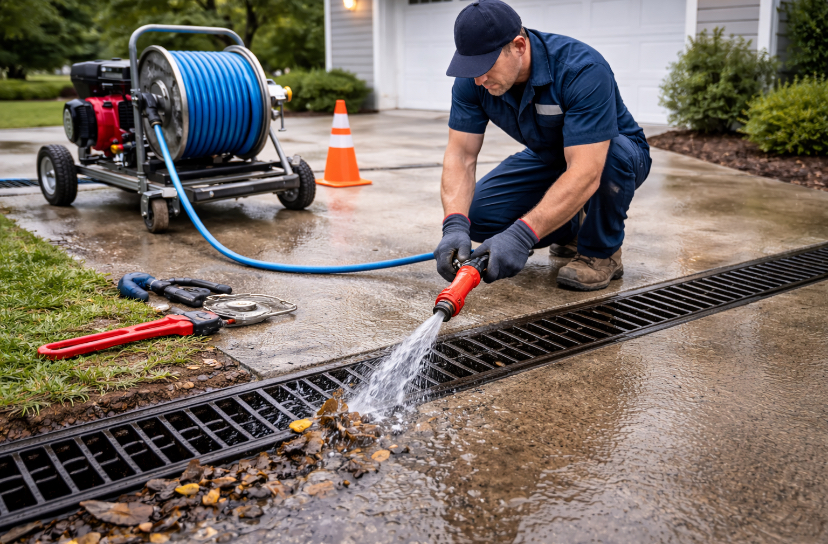
Our team handles driveway drain cleaning for homes and businesses across Houston. We know how hard Gulf Coast storms hit — and how fast drains fill with clay sediment and yard debris. Same-day service is available, and we respond to drain emergencies 24/7. Every job starts with a free estimate and transparent pricing before work begins.
Don’t wait for standing water to crack your driveway or seep toward your foundation. Call The Houston Plumbing Company today to schedule driveway drain cleaning. Driveway drains are part of the exterior drain services we handle for Houston properties.
Signs Your Driveway Drain Needs Professional Cleaning
Water pooling on your driveway after a light rain is the clearest warning sign. If the drain used to handle storms without backup, something is blocking the flow. Catching this early saves you from costly damage to your driveway, garage, and foundation.
Here are the most common signs Houston homeowners notice:
- Standing water around the drain grate that takes hours to recede
- Slow drainage during or after rain — water sits instead of flowing
- Visible debris buildup inside or on top of the grate
- Foul odors coming from the drain opening
- Gurgling sounds when water tries to pass through — this points to a deeper blockage underground
Homes near Meyerland and Bellaire sit in flood-prone areas where even partial clogs cause fast overflow. Houston receives over 50 inches of rain per year, and clay soil sediment washes into drains much faster than in sandy-soil regions. A drain that worked fine last season may already be partially blocked.
Spot any of these signs? Call The Houston Plumbing Company for same-day driveway drain cleaning.
Common Causes of Blocked Driveway Drains in Houston
Knowing what caused the clog helps you prevent it from happening again. Most driveway drain blockages in Houston come from a handful of repeat offenders.
Leaves and yard debris are the most frequent cause. Grass clippings, mulch, and fallen leaves wash straight into the grate during storms. In established neighborhoods like The Heights and Montrose, mature trees drop heavy loads of debris year-round.
Tree root intrusion is a serious problem in older Houston neighborhoods. Large oaks and pines send roots directly into underground drain pipes. The roots crack joints and catch passing sediment until the line is fully blocked.
Hardened silt and clay buildup happens over time. Houston’s expansive clay soil shifts and breaks apart, washing fine particles into drain lines where they compact into a dense plug.
Other common causes include:
- Grease and oil runoff from parked vehicles
- Construction sediment from nearby home projects or new builds in areas like Cypress and Katy
- Post-storm debris loads that overwhelm residential drains in a single heavy downpour
Our Houston plumbers pinpoint the exact cause and clear it. Call for a free estimate.
Why DIY Drain Solutions Often Make Clogs Worse
A quick internet search will tell you to pour salt, vinegar, or baking soda down a clogged drain. These methods may fizz and bubble, but they rarely fix an outdoor driveway drain.
Baking soda and vinegar create a chemical reaction that looks impressive. The fizz has almost no pressure behind it. Compacted clay, silt, and root masses inside a driveway drain line will not budge from a mild foaming action.
Salt and Epsom salt get recommended as natural drain cleaners. Neither one generates enough force to break through outdoor blockages. Worse, salt can corrode PVC fittings over time — weakening your pipes without clearing the clog.
Boiling water is another popular suggestion. Pouring boiling water into PVC drain pipes risks cracking the plastic or loosening cemented joints. One damaged joint underground turns a simple clog into a pipe repair.
Chemical drain cleaners are the riskiest choice. They eat away at pipe walls with repeated use. Many Houston driveway drains connect to the municipal stormwater system. Chemical runoff creates environmental problems and potential code compliance issues.
Licensed plumbers use hydro jetting and mechanical snaking — tools that match the job without damaging your pipes. Skip the guesswork and call The Houston Plumbing Company the first time.
How Professional Driveway Drain Cleaning Works
When you call for driveway drain cleaning, you deserve to know what happens before the plumber arrives. Here is the step-by-step process our Houston team follows on every job.
Step 1 — Visual inspection.
The plumber checks the drain opening and grate for visible blockages. Surface-level problems like packed debris or a crushed grate get identified right away.
Step 2 — Grate removal and hand clearing.
The grate comes off and any surface debris is removed by hand from the catch basin.
Step 3 — Mechanical snaking or hydro jetting.
A professional-grade snake or high-pressure water jet is fed into the drain line. The right tool depends on the type and depth of the clog.
Step 4 — Breaking the blockage.
High-pressure water cuts through compacted silt, grease, and root intrusion. Hydro jetting restores the full diameter of the pipe.
Step 5 — Flow test.
The plumber runs water through the drain to confirm full flow has returned.
Step 6 — Final check.
The grate is replaced and the drainage area is checked for proper surface runoff.
For recurring blockages or suspected pipe damage, camera inspection is available. Most residential driveway drains in Houston are cleared in a single visit. Commercial property managers in the Energy Corridor trust the same process for parking area drains.
We clean driveway drains for homes and businesses across Houston. Call The Houston Plumbing Company today.
Keep Your Driveway Drain Flowing Year-Round in Houston
A little routine maintenance keeps your driveway drain working when Houston storms hit hardest. These simple steps help you avoid emergency calls and expensive backups.
Clear the grate monthly. Pull leaves, dirt, and debris off the drain cover by hand. A clean grate lets water enter the drain instead of pooling on your driveway.
Trim tree roots near the drain path. Root intrusion is one of the top causes of underground blockages in older neighborhoods. Root barriers help protect drain lines near large trees in areas like Copperfield and Bear Creek.
Flush with a garden hose after storms. A strong stream of water pushes loose sediment through the line before it has a chance to compact and harden.
Schedule annual professional cleaning before storm season. Houston’s heavy rain season runs roughly May through October. A cleaning in April or early May prevents peak-season backups when you need your drain the most.
Keep harmful materials away from the drain. Never dump motor oil, paint, or yard chemicals near your driveway drain. These substances damage pipes and contaminate Houston’s stormwater system.
One more thing to watch — seasonal pollen and pine needle drop clog grates faster in spring. A quick weekly check during March and April saves you a bigger headache later.
Book a maintenance cleaning now. The Houston Plumbing Company keeps Houston drains clear year-round.
Frequently Asked Questions
How do I know if my driveway drain is clogged or just slow?
Standing water after light rain or water backing up toward your garage signals a clog. A slow drain usually means a partial blockage that will get worse without cleaning. If water takes more than a few minutes to clear after rain stops, it is time to call a plumber.
Is driveway drain cleaning the same as sewer line cleaning?
No — these are different services. Driveway drains handle surface rainwater runoff. Sewer lines carry wastewater from inside your home. Our Houston plumbers handle both, but the tools and approach are different for each.
Can tree roots block a driveway drain in Houston?
Yes. Houston’s large oaks and pines send roots into underground drain pipes searching for moisture. This is especially common in older neighborhoods like The Heights and Meyerland where mature root systems run deep and wide.
How often should I have my driveway drain cleaned in Houston?
Once a year works for most Houston homes. If you have heavy tree cover or your property sits in a low-lying area, twice a year is a better schedule — ideally before and after storm season.
Will your team also clean the catch basin under the drain grate?
Yes. We clear the grate, the catch basin, and the connecting drain pipe to restore full flow. A half-cleaned drain will clog again quickly.
What should I do if my driveway drain overflows during a Houston storm?
Stay clear of standing water for safety. Then call The Houston Plumbing Company for same-day service. We respond to drain emergencies 24/7 and can get water flowing again fast.
Schedule Driveway Drain Cleaning in Houston Today
Standing water damages driveways, cracks foundations, and floods garages. You do not have to wait for the next big storm to find out your drain is blocked.
The Houston Plumbing Company provides fast, licensed driveway drain cleaning across Houston. Our plumbers clear the grate, catch basin, and underground line in a single visit — so water flows where it should.
- 4.9-star Google rating (280+ reviews)
- Free estimates — no obligation
- Same-day service available
- 24/7 emergency response
Outdoor drainage connects to our full drain and sewer services in Houston. Call (281) 247-5055 for driveway drain cleaning in Houston.