
A clogged sink disrupts your daily routine. Whether water pools in your kitchen basin or your bathroom sink refuses to drain, the problem rarely fixes itself. The Houston Plumbing Company provides professional clogged sink repair across Greater Houston — with same-day service and a team that arrives ready to work. Our licensed plumbers have earned a 4.9-star Google rating from 280+ reviews. Houston homeowners and businesses count on us for accurate diagnosis and lasting results.
Kitchen sinks clog from grease, food scraps, and mineral buildup carried by Houston’s hard water supply. Bathroom sinks collect hair, soap residue, and toothpaste that form dense plugs inside the P-trap and drain line. Older homes in the Heights and River Oaks often have drain pipes narrowed by decades of internal scale and corrosion. We handle single-sink blockages and whole-house drain slowdowns — and we find the actual cause, not just the surface symptom.
Call The Houston Plumbing Company today for a free estimate on your clogged sink. Our plumbers are licensed, insured, and equipped for both residential and commercial drain service. You receive transparent pricing before any work begins — no hidden fees on your final bill. From kitchen drains to bathroom basins, we deliver full drain and sewer services for every property in Houston.
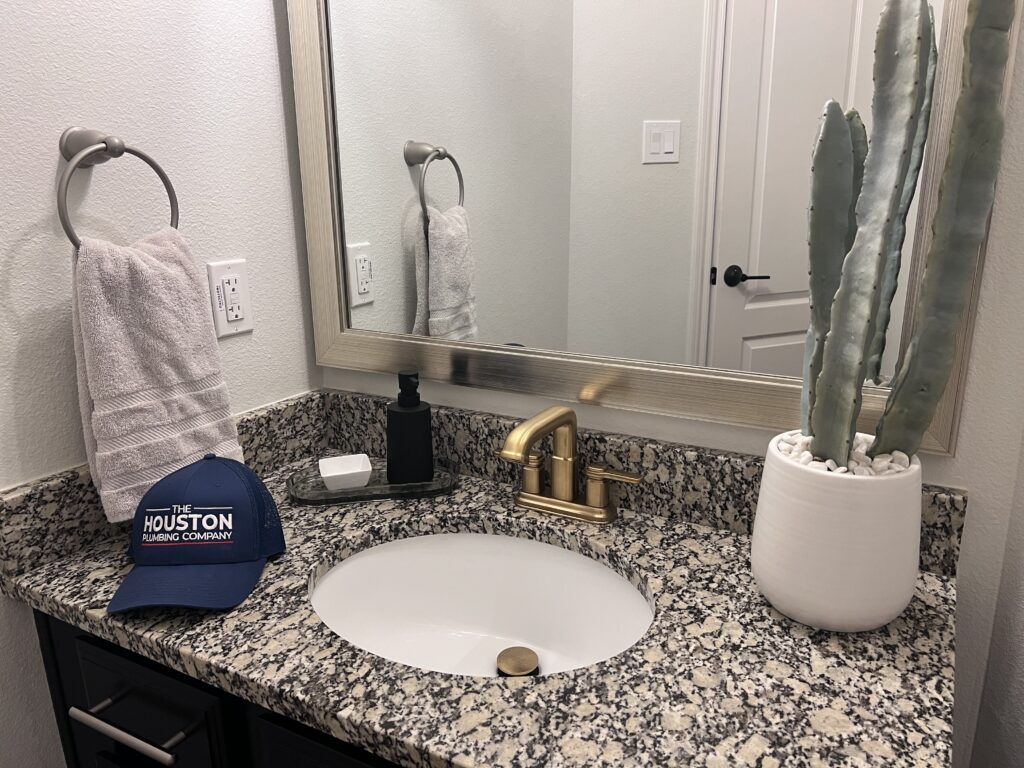
Warning Signs of a Serious Sink Clog in Houston
Not every slow drain is a minor issue. Some clogs build over weeks or months before they fully block the line. Knowing the warning signs helps you act before water damage reaches your cabinets, walls, or flooring.
Water drains slower each day. A sink that takes a few extra seconds today may take several minutes by next week. A progressive slowdown means material is building inside the pipe — not washing through it.
The sink fills and takes minutes to empty. When water rises to the basin rim during normal use, the line is nearly blocked. This is common across Houston homes — from newer construction in Cinco Ranch to established properties in Bellaire.
Gurgling sounds come from the drain or nearby fixtures. Air trapped behind a blockage creates a bubbling or gurgling noise when water tries to pass. If you hear it from a connected fixture, the clog may be deeper in the branch or main line.
A bad odor persists even after cleaning. Trapped food, grease, or hair decomposes inside the pipe. If the smell returns after you scrub the basin and drain cover, the source is below the surface. Houston’s heat and humidity speed up that decay.
Water backs up into the other basin of a double sink. When one side of a double kitchen sink pushes water into the other, the shared drain line is obstructed. Running the garbage disposal may make it worse if the blockage sits past the disposal connection.
Multiple sinks in the house drain slowly at the same time. This points to a main line issue — not a single fixture problem. If your kitchen and bathroom sinks both struggle to drain, a licensed Houston plumber should inspect the main sewer line.
Why a Licensed Plumber Is the Right Call for a Clogged Sink
A plunger and a bottle of drain cleaner work on minor surface clogs. When the blockage sits deeper in the line, those tools cannot reach it. A licensed plumber brings the right equipment and the experience to clear the clog without damaging your pipes.
A plunger only works on shallow clogs near the drain opening. Most serious sink blockages sit several feet into the horizontal pipe run — well past what a plunger can reach. If plunging does not restore full flow within a few attempts, the clog needs professional tools.
Store-bought drain products do not remove packed grease. Liquid drain cleaners may open a small channel through a blockage, but they rarely dissolve the full buildup. Grease that coats the inside of a kitchen drain line hardens over time and resists chemical treatment.
Plumbers use motorized drain snakes and camera inspections. A motorized snake cuts through hair, grease, and mineral scale deep inside the pipe. A drain camera confirms the clog is fully removed and reveals any pipe damage that caused the buildup in the first place.
Older Houston pipes need careful handling. Homes in Montrose and Meyerland often have cast iron or galvanized drain lines. These materials corrode from the inside and can break under aggressive DIY clearing methods. A licensed plumber adjusts technique and tool selection based on your pipe material.
One professional visit replaces weeks of repeated attempts. Every failed DIY fix delays the real solution while standing water sits in the line. A single service call from a Houston plumber diagnoses the problem, clears the blockage, and confirms full drainage — all in one trip.
What Causes Sink Clogs in Houston Kitchens and Bathrooms
Sink clogs rarely happen from a single event. They develop over weeks and months of normal use. Understanding what builds up inside your pipes helps you make better decisions about repair and prevention.
Kitchen drains collect grease, cooking oil, and food scraps. Every time you wash a pan or rinse a plate, small amounts of grease enter the drain line. That grease cools inside the pipe and hardens against the walls. Over time, it narrows the opening until water can no longer pass through. This is the number one cause of kitchen sink clogs across Houston.
Bathroom drains trap hair, soap residue, and toothpaste. Hair wraps around the pop-up stopper and drops into the P-trap below. Soap and toothpaste bind to the hair and form a dense, sticky plug. In households with multiple family members, this buildup accelerates quickly.
Hard water scale narrows pipes from the inside. Houston’s water supply carries high levels of calcium and minerals. Those minerals coat the interior walls of your drain pipes year after year. First-time homeowners in Copperfield, Langham Creek, and Spring Branch often discover this problem within the first few years of ownership.
Garbage disposal misuse pushes problem foods into the line. Fibrous items like celery, potato peels, and eggshells do not break down fully in a disposal. They pass into the drain line as stringy or gritty material that catches on grease and scale already inside the pipe.
Aging pipes corrode and catch debris at rough interior surfaces. Older Houston homes have drain pipes made of cast iron or galvanized steel. As these materials corrode, the inside surface becomes rough and uneven. Food particles, hair, and grease snag on those rough spots and clogs form faster than they would in smooth, newer piping.
How Our Houston Plumbers Diagnose and Clear Sink Clogs
We follow a methodical process on every clogged sink call. Each step builds on the last — so we find the blockage, remove it, and confirm full drainage before we leave. Most sink clogs are cleared in a single visit.
We inspect the drain opening, P-trap, and visible connections. Before we reach for any tools, we check what we can see. A visual inspection of the drain cover, stopper assembly, and exposed pipes under the sink tells us where to start. Trapped objects, visible grease buildup, or corroded fittings often point directly to the problem.
We remove and clean the P-trap if accessible. The curved pipe section under your sink holds a small amount of water at all times. It also catches hair, food, and debris that drops through the drain. We detach the P-trap, clear it, and check for trapped objects like bottle caps, utensil pieces, or hardened grease plugs.
We run a drain camera into the line to locate the blockage. If the clog is not in the P-trap, it sits deeper in the wall or under the slab. A small waterproof camera feeds through the pipe and shows us the exact location and type of blockage on a live monitor. Houston homes in Memorial and the Energy Corridor often have extended drain runs that require this step.
We clear the clog with a motorized drain snake or hydro-jet. A drain snake cuts through grease, hair, and mineral scale packed inside the pipe. For heavier blockages or heavily scaled lines, a hydro-jet uses high-pressure water to scour the pipe walls clean. We match the tool to the severity of the clog and the material of your pipes.
We flush the full line and test water flow at maximum volume. After clearing, we run water through the entire line at full pressure. We watch for proper drainage speed and listen for any remaining restriction in the system.
We report our findings and recommend next steps. If the camera inspection reveals cracked pipes, root intrusion, or heavy corrosion, we explain your repair options clearly. If the line is in good condition, we recommend a maintenance schedule to keep it that way. You make the decision with all the information in front of you.
Home Remedies That Can Damage Your Houston Plumbing
A clogged sink sends most homeowners straight to the internet for a quick fix. Some of those tips are harmless. Others can turn a simple clog into a pipe repair. Here is what to know before you try a home remedy on your Houston plumbing.
Boiling water is safe for metal pipes but risky for PVC. Pouring boiling water down a cast iron or copper drain line will not cause damage. However, many Houston homes — especially those built after 1990 — use PVC drain fittings and connections. Boiling water can soften PVC joints and warp plastic fittings over time. Hot tap water is a safer choice for routine flushing.
Chemical drain cleaners corrode pipes and dissolve rubber seals. Liquid drain products contain harsh chemicals designed to eat through organic material. They also eat through rubber gaskets, weaken glue joints, and thin pipe walls with repeated use. Homes built before 1980 in areas like Montrose and Meyerland often have galvanized steel or cast iron lines that react poorly to these products.
Baking soda and vinegar create fizz but not pressure. The bubbling reaction looks like it is working. In reality, the mixture breaks up light residue near the drain opening but cannot move a packed plug of grease or hair sitting several feet into the line. The clog stays in place.
Salt does not dissolve grease inside drain pipes. Online tips suggest pouring salt down the drain every night to keep it clean. Salt has no chemical effect on grease buildup. In PVC pipes, undissolved salt crystals can settle at low points and contribute to the blockage rather than clear it.
Repeated DIY attempts delay the real fix. Every day a clog sits in the line, standing water presses against pipe joints and seals. In Houston’s humidity, that moisture promotes mold growth under cabinets and inside walls. What starts as a slow drain can become water damage to subflooring and drywall if left too long.
If a plunger and a hot water flush do not restore full drainage, the clog needs professional attention. A Houston plumber can clear it safely — without putting your pipes at risk.
How Houston Plumbers Recommend Keeping Sink Drains Clean
A cleared drain does not stay clear on its own. Daily habits and a simple maintenance routine are the best protection against your next clog. Homeowners in Sugar Land, Katy, and Jersey Village who follow these steps call us far less often.
Run hot tap water through the kitchen sink for 30 seconds after washing dishes. Hot water keeps grease in liquid form long enough to move through the drain line and into the main sewer. Cold water lets grease solidify inside the pipe — right where the next clog will form.
Use a mesh drain screen in every sink. A small mesh screen over the drain opening catches hair, food scraps, and debris before they enter the pipe. This single step prevents the majority of P-trap clogs in both kitchens and bathrooms. Screens cost very little and take seconds to clean.
Never pour grease or cooking oil down any drain. Collect used cooking oil in a jar or container and dispose of it in the trash. Even small amounts of grease coat the inside of drain pipes and harden over time. This is the most common preventable cause of kitchen sink clogs in Houston homes.
Clean bathroom sink stoppers monthly. Remove the pop-up stopper assembly and pull out the collected hair and soap residue. A monthly cleaning keeps the stopper mechanism working properly and prevents buildup from reaching the P-trap below.
Schedule professional drain cleaning once a year. Grease, mineral scale, and soap residue accumulate inside your pipes whether you see it or not. An annual cleaning with a motorized snake or hydro-jet removes that buildup before it restricts flow. A Houston plumber can inspect the line at the same time and catch small problems early.
Ask about water softener installation. Houston’s hard water deposits calcium and lime scale inside every pipe in your home. A water softener reduces that mineral content at the source — protecting your drains, fixtures, and appliances from gradual buildup. Our team can recommend the right system for your household size and water usage.
Frequently Asked Questions
How do I know if my sink clog needs a plumber?
If the sink drains slowly every day, backs up into another fixture, or produces a foul odor that cleaning cannot remove, the clog is beyond a DIY fix. These signs point to a blockage deep in the line that requires professional tools. Schedule a drain inspection with a Houston plumber.
What tools do plumbers use to unclog a sink?
Professional plumbers use motorized drain snakes, hydro-jets, and drain cameras. A snake cuts through grease and hair packed inside the pipe. A hydro-jet scours the pipe walls with high-pressure water. A camera confirms the clog is fully cleared and checks for pipe damage.
Can boiling water damage my sink drain pipes?
Boiling water is generally safe for metal drain pipes. However, it can soften PVC joints and warp plastic fittings found in many Houston homes built after 1990. Hot tap water is a safer option for routine drain flushing.
Does baking soda and vinegar actually work on a clogged sink?
The fizzing action breaks up light surface residue near the drain opening. It does not generate enough force to move packed grease or hair deeper in the line. For a full blockage, a licensed Houston plumber with professional equipment is the right call.
What should I avoid putting down my kitchen sink in Houston?
Never pour grease, cooking oil, coffee grounds, or fibrous food scraps down the drain. These materials coat the inside of your pipes and harden over time. They are the top causes of kitchen sink clogs across Houston homes.
How do I keep my sink drains clean between plumber visits?
Run hot tap water for 30 seconds after every use. Use mesh drain screens to catch hair and food debris. Clean bathroom sink stoppers monthly. Schedule annual professional drain cleaning with a Houston plumber to remove buildup before it becomes a blockage.
Schedule Clogged Sink Repair in Houston Today
A clogged sink will not fix itself — and every day you wait gives the blockage more time to cause damage. The Houston Plumbing Company is here to get your drains flowing again.
Our licensed and insured plumbers carry a 4.9-star Google rating backed by 280+ reviews from Houston homeowners and businesses. We provide free estimates and transparent pricing before any work begins. You know the full scope before we start.
We offer 24/7 emergency service with same-day appointments available. Whether you need a kitchen sink cleared, a bathroom drain unclogged, or a full drain line inspection, our team handles residential and commercial sink repair across Greater Houston.
Sink clogs are one part of the Houston plumbing services our licensed plumbers handle every day
Call (281) 247-5055 for professional clogged sink repair in Houston.