
A clogged washing machine drain turns laundry day into a cleanup project. Water pooling on the floor, clothes left soaking in the drum, and overflow from the standpipe all point to a blockage in the line. The Houston Plumbing Company provides professional washer drain repair across Greater Houston — with same-day service and licensed plumbers who trace the problem to its source. Our team holds a 4.9-star Google rating from 280+ reviews. Houston homeowners trust us to get the diagnosis right and the repair done in one visit.
Lint, detergent residue, and fabric softener build up inside washer drain hoses and standpipes with every load. Houston’s hard water adds mineral scale that narrows drain lines faster than soft-water areas. Older homes in Meyerland and the Heights often have undersized or corroded laundry drain pipes that cannot handle the volume a modern washer discharges. We service top-load, front-load, and commercial washing machine drain systems — and we identify the actual cause of the backup, not just the surface symptom. Standpipe overflows often trace back to line problems our drain and sewer services correct.
Call The Houston Plumbing Company today for a free estimate on your washer drain problem. Our plumbers are licensed, insured, and equipped for residential and commercial laundry drain service. You receive transparent pricing before any work begins — no surprise charges on your bill. From standpipe clogs to full branch line blockages, we deliver complete drain and sewer services for Houston laundry rooms.
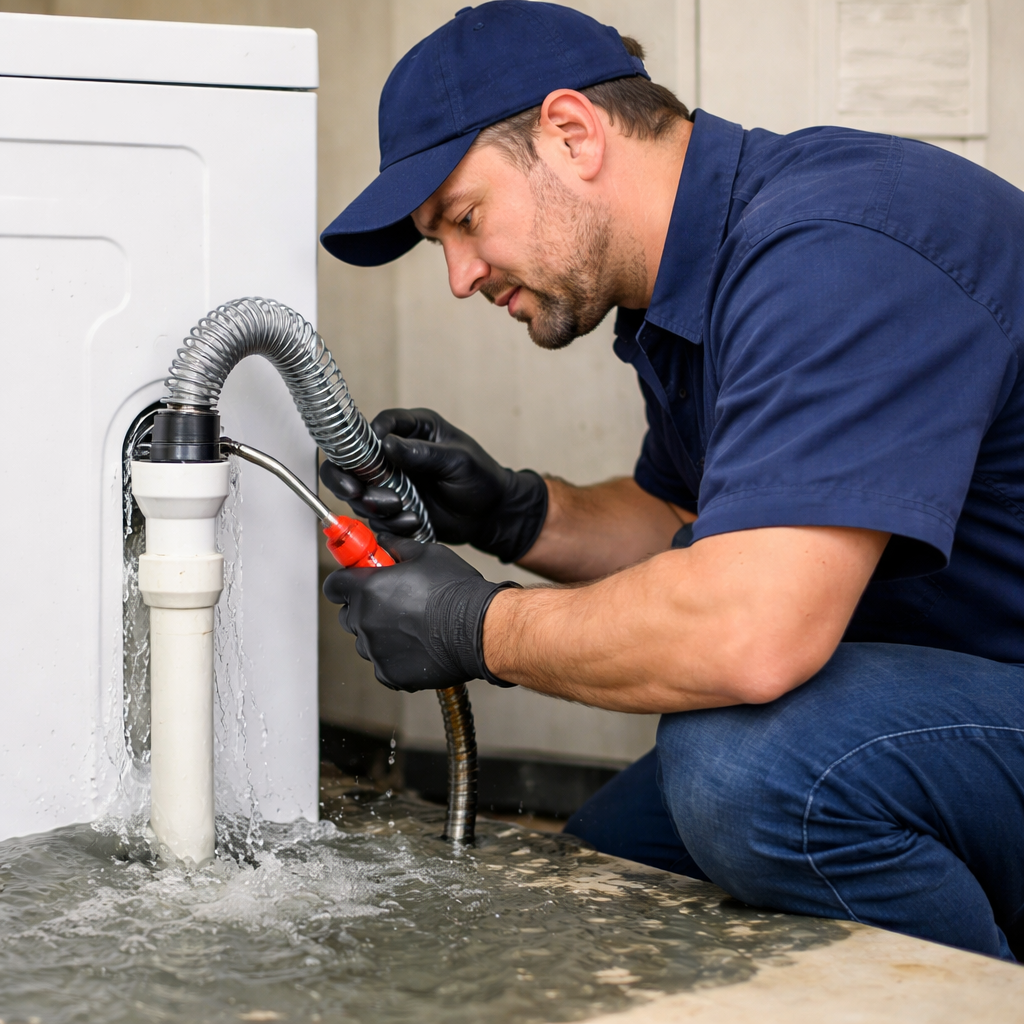
Signs Your Washing Machine Drain Is Clogged
A washing machine drain clog does not always announce itself with a flood. Some signs start small and build over several loads. Catching them early protects your laundry room from water damage and mold — both of which develop fast in Houston’s humidity.
Water remains in the drum after the spin cycle completes. If you open the lid or door and find standing water at the bottom, the machine could not pump it out. The blockage is restricting flow somewhere between the drain hose and the branch line.
Clothes come out soaking wet after a full wash and spin. The spin cycle wrings water from your clothes by forcing it out through the drain. When the line is restricted, water backs into the drum and your clothes stay heavy and dripping. This is one of the earliest signs families in Copperfield, Cinco Ranch, and Bear Creek notice during heavy laundry weeks.
Water backs up or overflows from the standpipe. The standpipe is the vertical pipe behind your washer where the drain hose connects. When the line below it is clogged, water has nowhere to go but up and over the top — onto your floor.
A foul or musty smell comes from the drain area or inside the drum. Lint, detergent sludge, and trapped water decompose inside the pipe. If the odor stays after you wipe down the drum and gasket, the source is in the drain system. Houston’s heat speeds up that buildup.
The washing machine stops mid-cycle and displays a drain error code. Most modern washers have sensors that detect when water is not leaving the drum fast enough. An error code during the drain or spin phase almost always points to a line restriction — not a machine failure.
Water pools on the laundry room floor during or after a cycle. If water appears around the base of the machine or near the standpipe, the drain line is backing up under pressure. Act quickly — standing water on tile or laminate can seep under baseboards and into adjacent rooms.
Why a Plumber Handles Washing Machine Drain Clogs Better Than a DIY Fix
You disconnected the drain hose. You ran a cleaning cycle. The washer still will not drain. Most washing machine drain clogs sit beyond the machine itself — in the standpipe, the P-trap, or the branch line inside the wall. A licensed plumber has the tools and training to reach those areas safely.
Most washer drain clogs are plumbing problems, not appliance problems. The washing machine pumps water out. The plumbing system carries it away. When the standpipe, P-trap, or branch line is blocked, no amount of work on the machine will fix the drainage issue. A plumber works on the system that moves the water — which is where the clog almost always lives.
An appliance technician and a plumber solve different problems. If your washer will not start, makes unusual noises, or has a broken pump, call an appliance technician. If water stays in the drum, overflows from the standpipe, or pools on the floor, the drain line needs a plumber. Calling the right trade first saves you a wasted service visit.
A plumber uses a motorized snake and drain camera to reach deep blockages. Lint and detergent sludge pack into horizontal pipe runs behind walls and under slabs. A household drain tool cannot reach that far or break through that material. Professional equipment clears the full diameter of the pipe — not just a narrow channel through the middle.
Older Houston homes often have undersized laundry standpipes. Homes in Montrose and Spring Branch built before 1985 may still have 1.5-inch standpipes. The current standard is 2 inches. A narrower pipe clogs faster under the volume a modern washer produces. A plumber can assess whether your standpipe needs an upgrade to handle your current machine.
A single plumber visit eliminates repeat attempts and prevents further damage. Every failed DIY effort leaves standing water in the line longer. In Houston’s humidity, that moisture promotes mold behind walls and under laundry room flooring. One professional visit diagnoses the clog, clears it, and confirms full drainage — so you are not back on the floor with towels next week.
What Causes Washing Machine Drain Clogs in Houston Homes
Washing machine drain clogs develop gradually. Each load sends a small amount of material into the drain system. Over weeks and months, that material accumulates until the line can no longer keep up with the volume of water your washer discharges.
Lint passes through the washer’s internal filter and accumulates in the drain system. Every cycle loosens tiny fabric fibers from your clothes, towels, and bedding. The washer’s built-in filter catches some of that lint — but not all of it. The rest travels through the drain hose and into the standpipe, where it collects along the pipe walls and inside the P-trap. Households in Langham Creek, Jersey Village, and Katy that run multiple loads per day see this buildup accelerate quickly.
Excess liquid detergent and fabric softener harden into sludge over time. Using more soap than the manufacturer recommends does not make clothes cleaner. The extra product does not dissolve fully during the wash cycle. It enters the drain line as a thick, soapy film that coats the inside of the hose, standpipe, and P-trap. Over time, that film hardens into a dense sludge that traps lint and narrows the pipe.
Houston’s hard water deposits mineral scale inside laundry drain lines. The local water supply carries high levels of calcium and dissolved minerals. Those minerals coat the interior surface of your drain pipes with a rough, chalky layer. Lint and detergent residue stick to that rough surface instead of washing through — and the blockage grows with every load.
Small items slip past the drum seal and lodge in the drain hose or pump filter. Socks, coins, hair ties, and small clothing items work their way between the drum and the door gasket. Once past the seal, they enter the drain hose or catch in the pump filter. A single trapped sock can reduce water flow enough to cause a backup.
The standpipe P-trap collects lint, detergent sludge, and sediment. The P-trap is the curved section of pipe directly below the standpipe. It holds water to block sewer gas from entering your home. It also catches everything the drain hose pushes into it. Without periodic cleaning, that trap fills with compressed lint and soap residue until water can no longer pass through at the rate a washing machine demands.
How Our Houston Plumbers Clear a Clogged Washing Machine Drain
We follow a structured process on every washer drain call. Each step narrows the problem until we find the blockage, remove it, and confirm your machine drains properly. Most washing machine drain clogs are cleared in a single visit.
We inspect the drain hose connection, standpipe, and visible P-trap. Before we use any equipment, we check what we can see and access. We look at how the drain hose sits in the standpipe, whether the hose has kinks or damage, and whether the visible P-trap shows signs of buildup. Loose hose connections and improper standpipe height cause drainage failures that look like clogs but have a different fix.
We disconnect and flush the drain hose. The flexible hose that runs from your washer to the standpipe collects lint on its interior walls with every cycle. We detach it, inspect the inside, and flush it clean. If the hose is kinked, cracked, or packed with hardened residue, we identify it at this stage. Trapped objects like socks or hair ties often lodge at the hose’s discharge end.
We run a drain camera into the standpipe and branch line. If the hose is clear and the clog persists, the blockage sits deeper in the system. A small waterproof camera feeds into the standpipe and follows the line through the P-trap and into the branch drain. The camera shows us the exact location, type, and severity of the blockage on a live monitor. Houston homes in Memorial Villages and the Energy Corridor often have laundry rooms on upper floors with longer drain runs that require this step.
We clear the clog with a motorized drain snake sized for the laundry line. Laundry drain pipes are narrower than main sewer lines and require the right tool for the diameter. A motorized snake breaks through packed lint, detergent sludge, and mineral scale without damaging the pipe walls. We match the snake head and cable size to your specific pipe material and width.
We flush the entire line and run a full wash cycle to confirm proper drainage. After clearing, we push water through the full length of the line to verify nothing remains. Then we run your washing machine through a complete cycle and watch the standpipe, hose connection, and floor area for any sign of backup or overflow.
We report our findings and recommend next steps. If the camera reveals a cracked pipe, root intrusion, or a standpipe that is undersized for your machine, we explain the options and what each one involves. If the line is in good shape, we recommend a maintenance interval to keep it clear. You decide what happens next — with a full picture of the condition of your drain system.
Home Remedies That Can Make a Washer Drain Clog Worse
A quick search for “how to unclog a washing machine drain” returns dozens of home remedies. Some are harmless but ineffective. Others carry real risk to your pipes and fittings. Here is what to know before you try a DIY fix on your Houston laundry drain.
Chemical drain cleaners corrode PVC joints and dissolve rubber gaskets. Liquid drain products are designed to eat through organic material. They also attack the rubber seals, glue joints, and PVC fittings that connect your laundry drain system. One application may seem to help. Repeated use weakens those connections until they leak — sometimes inside the wall where you cannot see the damage. Many Houston homes use PVC for laundry drain lines, and these fittings are especially vulnerable.
Boiling water can soften PVC standpipe fittings. Pouring boiling water directly into the standpipe risks warping plastic connections and loosening cemented joints. The damage may not show immediately, but repeated exposure weakens the pipe over time. Hot tap water is a safer option if you want to flush the line between professional cleanings.
Vinegar and baking soda do not move packed lint and sludge. The fizzing reaction breaks up light surface residue near the top of the standpipe. But washer drain clogs are made of compressed lint, fabric fibers, and hardened detergent — packed into horizontal runs behind the wall. The mixture does not generate the pressure or reach needed to clear that material.
Store-bought washing machine cleaners treat the drum, not the drain line. Products marketed as washer cleaners dissolve residue inside the drum and door gasket. They do not reach the standpipe, P-trap, or branch line where the clog sits. Running a cleaning cycle with these products may improve the smell of your machine, but it will not restore drainage.
Pouring excess detergent or bleach down the standpipe adds to the problem. Extra soap does not dissolve a clog — it becomes part of it. Detergent that does not rinse through hardens against the pipe walls and traps more lint. Bleach may kill surface bacteria, but it does not break down the sludge blocking the line.
Delayed repair lets standing water sit in the line and behind walls. Every cycle that fails to drain pushes water against pipe joints and into areas it should not reach. Houston’s humidity accelerates mold growth in enclosed spaces. What begins as a slow drain can become water damage to subflooring, drywall, and baseboards if the clog is left in place too long.
If a basic hose check and hot water flush do not restore full drainage, the clog needs professional clearing. A Houston plumber can remove the blockage safely — without putting your pipes or your laundry room at risk.
How to Keep Your Washing Machine Drain Clear in Houston
A cleared drain line does not maintain itself. Lint, detergent residue, and mineral scale start building again with your very next load. A few simple habits keep your washer draining properly and reduce the chance of another backup. Homeowners in Sugar Land, Eldridge, and Tomball who follow this routine call us far less often.
Use only the manufacturer-recommended amount of detergent. The measuring lines on the cap exist for a reason. Extra soap does not dissolve fully during the wash cycle. The excess travels into the drain line as a thick film that hardens over time. This is the single most common cause of sludge buildup in laundry drain systems across Houston.
Switch to HE detergent if you have a front-load washer. Front-load machines use less water than top-load models. Standard detergent produces too much foam and residue for the lower water volume. HE (high-efficiency) detergent is formulated to clean effectively with less water — and it leaves far less residue in the drain hose and standpipe.
Clean the washer’s lint trap or filter screen monthly. Most washing machines have an accessible filter that catches lint, coins, and small items before they reach the drain hose. Check your owner’s manual for the location. A monthly cleaning keeps more lint in the filter and out of your drain system.
Wipe the rubber door gasket on front-load washers after every load. The rubber seal around the door traps moisture, lint, and detergent residue after each cycle. That material feeds mold growth and eventually transfers into the drain. A quick wipe with a dry cloth after every load prevents buildup on the gasket and keeps contaminants out of the line.
Run a hot water maintenance cycle with no clothes once a month. Set your washer to its hottest setting and run a complete cycle with an empty drum. The hot water flushes residue from the drum, hose, and drain connection. This single step dissolves soft buildup before it has a chance to harden inside the pipe.
Schedule annual professional drain cleaning for the laundry standpipe and branch line. Even with good daily habits, lint and mineral scale accumulate inside the pipes over time. Houston’s hard water makes this unavoidable. A yearly cleaning with a motorized snake removes that buildup and gives your plumber a chance to inspect the line condition before a problem develops. Our team can set up a maintenance schedule that fits your household.
Frequently Asked Questions
How do I know if my washing machine drain is clogged or if the machine is broken?
If water stays in the drum, overflows from the standpipe, or pools on the floor, the problem is almost always in the drain line — not the machine. A washing machine with a failed pump will usually display a specific error code. A Houston plumber can confirm whether the issue is in the drain system in one visit.
Why does my washing machine have water sitting in it after a cycle?
A clogged drain hose, blocked standpipe, or backed-up branch line prevents the pump from pushing water out of the drum. Lint buildup and Houston’s hard water are the most common causes. If a basic drain hose check does not solve it, call a plumber to inspect the standpipe and branch line.
Why are my clothes still soaking wet after the spin cycle finishes?
The machine cannot remove water from your clothes if the drain line is restricted. Water backs into the drum during the spin phase and your clothes stay heavy and dripping. A clogged standpipe or kinked drain hose is the most likely cause.
What is the sludge buildup inside my washing machine drain?
That sludge is a mix of lint, dissolved fabric fibers, detergent residue, and mineral deposits from Houston’s hard water. It accumulates in the drain hose, standpipe, and P-trap over months of normal use. A professional drain cleaning removes it completely and restores full flow.
How do I stop mold from growing in my front-load washer and drain system?
Wipe the rubber door gasket dry after every load and leave the washer door open between uses. Run a monthly hot water maintenance cycle with an empty drum. Schedule annual drain cleaning to remove the sludge that holds moisture and feeds mold growth — especially in Houston’s year-round humidity.
Should I call a plumber or an appliance repair company for a washer drain clog?
Call a plumber. Most washing machine drain clogs involve the standpipe, P-trap, or branch line — not the appliance itself. An appliance technician works on the machine. A plumber works on the drain system that carries the water away. Call The Houston Plumbing Company for a free estimate and honest diagnosis.
Schedule Washing Machine Drain Repair in Houston Today
A washer drain clog does not improve on its own — and every load you run pushes more water against a blockage that is already causing problems. The Houston Plumbing Company is here to clear the line and get your laundry room back to normal.
Our licensed and insured plumbers carry a 4.9-star Google rating backed by 280+ reviews from Houston homeowners and businesses. We provide free estimates and transparent pricing before any work begins. You know exactly what the job involves before we start.
We offer 24/7 emergency service with same-day appointments available. Whether you need a standpipe cleared, a drain hose inspected, or a full laundry branch line cleaned, our team handles residential and commercial washer drain repair across Greater Houston. We service top-load, front-load, and stacked units.
Laundry drain backups are one of the common drain clogs we clear across Greater Houston.
Call (281) 247-5055 for professional washing machine drain repair in Houston.