A broken commercial sewer line can shut your Houston business down in hours. Backed-up drains, foul odors, and standing water drive customers away and put your property at risk. The Houston Plumbing Company repairs and replaces commercial sewer lines across the Greater Houston area. Our licensed, insured team carries a 4.9-star Google rating backed by 280+ reviews from local business owners who count on us.
We handle every commercial sewer problem — from cracked lateral lines to full pipe replacements. Houston’s clay soil and aging infrastructure put extra stress on underground pipes. Our plumbers use video camera inspections to find the exact damage and recommend the right fix. We serve restaurants, offices, retail buildings, and warehouses across Houston. Sewer replacement is one part of our commercial drain and sewer services for Houston buildings.
Call The Houston Plumbing Company today for a free commercial sewer estimate. We answer calls 24/7 and offer same-day emergency response. You get transparent pricing before any work begins — no surprises.
Four Warning Signs a Commercial Sewer Line Is Broken
Sewer line damage does not always start with a flood. Most commercial sewer problems in Houston show smaller warning signs first. Catching these signs early saves your business from costly shutdowns and property damage.
Persistent drain clogs. When multiple drains in your building slow down at the same time, the problem is likely in the main sewer line — not individual fixtures. Recurring clogs that come back after clearing point to cracks or root intrusion underground.
Foul odors inside or outside. A working sewer line is airtight. If you smell sewage near floor drains, restrooms, or in the parking lot, the pipe has a break or separated joint letting gas escape.
Soggy patches on the property. Wet spots in your parking lot or near the foundation — with no rain to explain them — often mean a sewer line is leaking below the surface. Left alone, this weakens pavement and can undermine your building’s slab.
Sewage backup into floor drains. This is the most urgent sign. When wastewater pushes back into your building, the line is blocked or collapsed. Businesses near the Heights and Montrose in older commercial buildings see this more often because of aging cast-iron pipes and Houston’s shifting clay soil.
If you notice any of these signs, act fast. A video camera inspection pinpoints the damage so we can recommend a repair or replacement — not a guess.
Who Is Responsible for Commercial Underground Sewer Drainage in Houston
Many Houston business owners are unsure who handles a sewer problem — their company or the city. The answer depends on where the damage is located.
The property owner is responsible for the lateral sewer line. This is the pipe that runs from your building out to the city main under the street. If that lateral line cracks, clogs, or collapses on your property, the repair falls on you — not the City of Houston.
The City of Houston Public Works maintains the main sewer line in the street. If the blockage or break is in the main, you report it to the city. But if the problem is in your lateral line — even under the parking lot or sidewalk — it is your responsibility to fix.
Most commercial property owners do not know exactly where their lateral line runs or where it connects to the city main. We locate the line with a video camera inspection and map the damage before any work starts. This tells you exactly what needs repair and where the property line responsibility begins.
Houston requires permits and city inspections for any commercial sewer line work. We handle the permit process and schedule inspections so you do not have to manage it yourself.
What a Commercial Sewer Replacement Involves
A full sewer line replacement sounds like a big job — and it is. But knowing what to expect makes the process easier to plan around your business operations.
Here is how a commercial sewer replacement works in Houston, step by step:
- Video camera inspection. We send a camera through the line to see the exact location and type of damage. This tells us if a repair will hold or if the full line needs to come out.
- Locate and mark the damage. We map the pipe path and mark dig points on the surface. This protects other utilities and structures on your property.
- Choose the method. Depending on the pipe condition and site layout, we use traditional trenching or trenchless methods like pipe bursting. Trenchless options reduce damage to parking lots and landscaping.
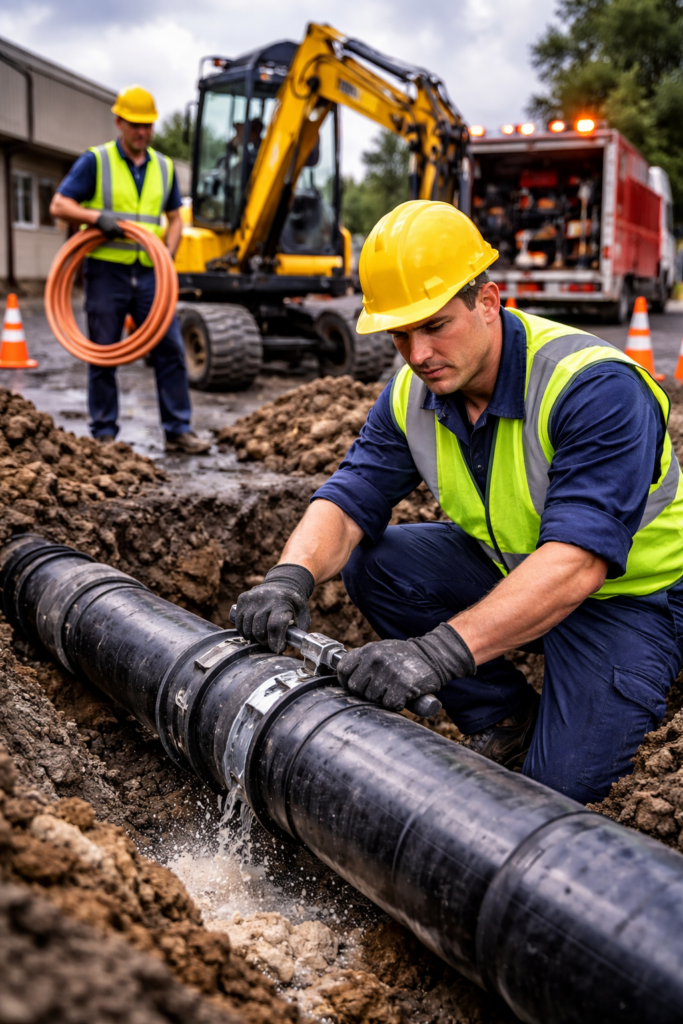
- Remove the old line and install new pipe. The failed pipe is pulled out and replaced with upgraded material rated to resist Houston’s soil movement.
- City inspection. Houston requires a city inspector to approve the new line before it is covered. We schedule this and stay on-site until it passes.
- Backfill and restore. We fill the trench, compact the soil, and restore the surface to its original condition.
Many commercial buildings in Copperfield and the Energy Corridor sit on expansive clay soil that speeds up pipe failure. In these areas, we often recommend upgraded pipe material built to handle continued ground shifting.
We work around your business hours when possible so your doors stay open during the project.
How Proper Slope and Offset Keep Commercial Sewer Lines Working
A sewer line that is installed wrong will fail — even if the pipe itself is brand new. Two factors cause most repeat problems in commercial sewer systems: bad slope and poor offsets.
Slope is the downward angle of the pipe. Most commercial sewer lines need a minimum slope of one-quarter inch per foot. Too flat, and waste sits in the pipe. Solids settle, grease builds up, and clogs form. Too steep, and liquids rush past solids — leaving debris behind that blocks the line over time.
Sewer offset is a lateral shift in the pipe run. This happens where a line has to route around a foundation, column, or other underground obstacle. Offsets use angled fittings to change direction. If the fittings are too sharp or poorly connected, waste catches at the joint and backs up into your building.
In Houston, flat terrain and settling clay soil make slope problems worse. A pipe installed at the correct angle can lose slope over the years as the ground shifts underneath it. What passed inspection five years ago may be sitting flat today — and causing backups you cannot explain.
We verify slope with laser levels during every installation and repair. After the work is done, a camera inspection confirms the line flows correctly end to end. This extra step prevents callbacks and protects your business from future drainage failures.
Houston Code Compliance for Commercial Sewer Systems
Commercial sewer work in Houston is not a job you can do without permits. The city requires inspections and code compliance on every commercial sewer repair and replacement. Hiring a plumber who skips this step puts your business at risk of fines and failed inspections down the road.
Division 22 of commercial building codes covers plumbing systems — including sewer lines, drainage piping, and cleanouts. This is the standard city inspectors use when they review commercial sewer work. Our team knows these requirements and builds every job to meet them.
The 135 rule applies to drainage fittings. Fittings in a sewer line should not create turns sharper than 135 degrees. Sharp turns slow waste flow and create spots where solids collect and block the pipe. We use properly angled fittings on every commercial sewer job to keep waste moving through the line without resistance.
Houston code enforcement also has specific requirements for commercial sewer tie-ins. Restaurants and food service buildings in Westchase and Chinatown often need grease trap compliance alongside sewer line work. If your business handles food prep, the sewer project may include grease interceptor upgrades to pass inspection.
We pull all permits before work begins and schedule the city inspection when the job is ready. You do not have to manage paperwork or wait on hold with the city. We handle that so you can focus on running your business.
Cleanouts, Camera Inspections, and Ongoing Commercial Sewer Maintenance
Most commercial sewer emergencies in Houston are preventable. A basic maintenance routine catches problems months before they turn into backups, shutdowns, or property damage.
Floor cleanouts (FCOs) give plumbers direct access to your sewer line from inside the building. An FCO is a capped access point set into the floor — usually in a utility room, kitchen, or restroom area. When a blockage happens, we open the cleanout and clear the line without digging. Most Houston commercial buildings are required to have at least one. If yours is missing or buried under flooring, we install or locate it so the next service call is faster.
Camera inspections show the inside of your sewer line in real time. We feed a waterproof camera through the pipe and record what we find — cracks, root intrusion, scale buildup, joint separation, or bellied sections where the line has sagged. An annual inspection is a good baseline for most commercial properties. Restaurants and food service businesses in Houston should inspect every six months because of grease buildup.
Hydro jetting clears grease, sludge, and debris from commercial sewer lines using high-pressure water. This is more thorough than a standard drain snake and keeps the full diameter of the pipe open. We recommend hydro jetting as part of a regular maintenance schedule — especially for businesses with heavy drain use.
Houston’s large oak and pecan trees send roots into commercial sewer lines year-round. Properties in established areas like Memorial and Meyerland deal with root intrusion more often than newer developments. A scheduled inspection catches root growth early — before it cracks the pipe and forces a full replacement.
A maintenance plan protects your business from surprise sewer failures. We set up a schedule based on your building type, usage, and line condition.
Frequently Asked Questions
How do I know if my commercial sewer line in Houston needs repair or full replacement?
A camera inspection tells you which option fits. If the damage is limited to a small crack or isolated root intrusion, a targeted repair usually works. If the line is collapsed, heavily corroded, or has damage in multiple spots, replacement is the better long-term fix. We inspect the full line and recommend the right solution for your building.
Is my Houston business responsible for the sewer line under the parking lot?
Yes. The property owner is responsible for the lateral sewer line from the building to the city main. The City of Houston only maintains the main line in the street. If the break or blockage is on your side of the connection, the repair is yours to handle. We locate your lateral line with a camera inspection and show you exactly where the problem is.
Can commercial sewer lines in Houston be replaced without digging up the whole property?
In many cases, yes. Trenchless methods like pipe bursting or pipe lining reduce the amount of excavation needed. Our team evaluates the pipe condition, depth, and site layout to determine if trenchless works for your Houston property. This option causes less disruption to parking lots, landscaping, and daily business operations.
What is a floor cleanout and does my Houston commercial building need one?
A floor cleanout is a capped access point in the floor that lets plumbers clear sewer blockages without digging. Most Houston commercial buildings are required to have at least one by code. If yours is missing, buried, or damaged, we install and repair cleanouts so future service calls are faster and less invasive.
Do I need a permit for commercial sewer work in Houston?
Yes. The City of Houston requires permits and a city inspection for all commercial sewer repair and replacement work. We pull the permits before work begins and schedule the inspection when the job is ready. You do not have to manage the paperwork or deal with the city directly.
How often should a Houston business schedule commercial sewer line inspections?
Once a year is a good baseline for most commercial properties. Restaurants and food service buildings should schedule inspections every six months because of grease buildup and heavy drain use. Regular camera inspections catch root intrusion, joint separation, and pipe damage early — before they cause emergency shutdowns.
Call (281) 247-5055 for Commercial Sewer Repair & Replacement in Houston
Your Houston business depends on a working sewer system. When something goes wrong underground, you need a licensed plumbing team that shows up fast and gets the job done right.
The Houston Plumbing Company provides full commercial sewer repair and replacement across the Greater Houston area. We are licensed, insured, and backed by a 4.9-star Google rating with 280+ reviews from local businesses. We confirm line condition with a commercial drain and sewer inspection before any replacement.
Here is what you get when you call us:
- 24/7 emergency service — we answer calls around the clock
- Free estimates with transparent pricing before work begins
- Financing available for major commercial sewer projects
Call (281) 247-5055 today to schedule a free commercial sewer estimate.
Learn more about our services: https://www.thehoustonplumbingcompany.com/