
Standing water ruins yards and damages homes across Houston every rain season. Landscape drain services in Houston give you a lasting fix. Our licensed, insured plumbers design and install drain systems that move water away from your foundation fast. With a 4.9-star Google rating and over 280 reviews, we bring real drain and sewer expertise to every job — not just a landscaper with a shovel.
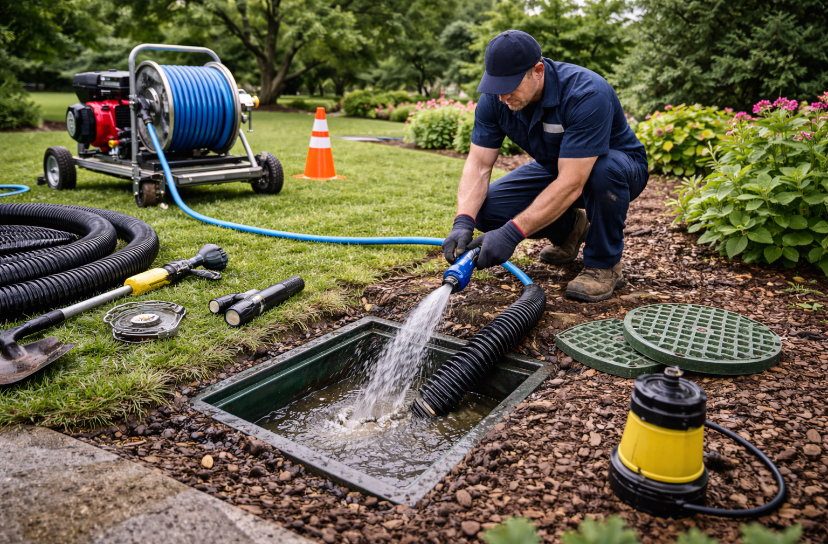
Houston’s clay soil shifts with every storm and traps water right against your slab. We install French drains, channel drains, and catch basins built for how Houston properties flood. Our team serves Cypress, Katy, Memorial, the Heights, and all of Greater Houston. We answer calls 24/7 and offer same-day service when storms hit hard.
Call The Houston Plumbing Company today for a free yard drainage estimate. We provide transparent pricing before any work begins — no surprises. Our team is ready to help every Houston household protect their home from water damage. Landscape drainage connects to our full drain and sewer services in Houston.
Warning Signs Your Houston Yard Has a Drainage Problem
Most Houston homeowners ignore a soggy yard until the damage shows up inside. Pooling water that sits for more than 24 hours after rain is not normal. It means water has nowhere to go — and your foundation is soaking it up.
Watch for soft, mushy spots and small erosion channels cutting through your lawn. Exposed tree roots and patches of dead grass near your home’s perimeter are red flags. Water stains or hairline cracks along your foundation wall point to moisture pushing against the slab.
Standing water also breeds mosquitoes — a year-round health concern in Houston. If you smell mold or mildew near your exterior walls, water is likely sitting behind them. Homeowners in Meyerland, Bellaire, and other low-lying areas see these signs more often because the ground stays saturated longer.
Houston’s clay soil expands when wet and shrinks when dry. That cycle traps water against your foundation and causes the ground to shift underneath it. Catching these warning signs early saves you from bigger repairs later.
Why Licensed Plumbers Handle Landscape Drains Better Than Landscapers
Landscapers grade soil and plant flower beds. They do not run underground pipe or connect drain lines to city storm systems. Yard drainage is a plumbing job — not a landscaping job.
A licensed plumber finds the real cause of your flooding first. We use video camera inspection to look inside your existing pipes and check for blockages or broken lines. That tells us exactly where the water is going wrong before we dig anything up.
Plumbers handle the technical side that landscapers skip. We calculate the right slope so water flows by gravity. We size the pipe to match your yard’s water volume. We backfill trenches the right way so the ground doesn’t settle and create new low spots.
When your new drain ties into an existing line, a plumber makes that connection without creating backups or pressure problems. In Houston, improper drainage work can void your foundation warranty. The city also requires permits for certain drainage jobs — and licensed plumbers know Houston code requirements.
Homeowners in Copperfield and Bear Creek often deal with HOA drainage rules on top of city codes. A licensed plumber handles both so you stay compliant and your yard stays dry.
Yard Drain Options That Work in Houston Clay Soil
Houston’s clay soil does not absorb water the way sandy or loamy soil does. That means your drain system needs to move water off your property — not just push it underground and hope it soaks in. The right drain type depends on your yard layout, where the water collects, and where it can safely go.
French drains use a gravel-filled trench with a perforated pipe buried inside. Water seeps through the gravel and into the pipe, then flows away from your foundation underground. These work best for yards with soggy soil and subsurface water that never dries out.
Channel drains sit at surface level with a metal or plastic grate on top. They capture sheet runoff along driveways, patios, and walkways. If water rushes across your hardscape every time it rains, a channel drain catches it before it pools.
Catch basins are box-shaped drains placed at the lowest points in your yard. They collect water and route it through a pipe to an outlet like a storm drain or dry well.
Dry wells are underground collection chambers that hold water and let it slowly release into the soil. These are useful when your property has no access to a city storm drain.
Many newer communities like Cinco Ranch and Langham Creek Estates have flat lots that need engineered drainage from the start. Our team matches the right system to your Houston property layout during your free estimate.
What to Expect Before Your Landscape Drain Installation in Houston
Knowing what happens before the work starts makes the whole process easier. We walk you through every step so there are no surprises on install day.
It starts with a free on-site estimate. Our team inspects your yard’s slope, soil type, and any existing drainage. We look at where water collects, where it flows, and where it needs to go instead. That assessment tells us which drain type fits your property best.
Before any digging begins, we schedule a utility locate through 811. Houston utility lines for gas, water, and electric run close to the surface. Marking those lines first keeps your property and our crew safe.
Yard drains typically sit 12 to 18 inches deep depending on the system and your soil conditions. Houston soil affects both depth and drain type, so we adjust based on what we find during the inspection — not a one-size guess.
Most residential landscape drain installs finish in a single day. Homeowners in the Energy Corridor and Memorial Villages often have mature landscaping that needs careful trenching around tree roots and garden beds. We plan our path to protect what you have in the ground.
You get transparent pricing before any work starts. We tell you the full scope upfront so you can decide with confidence.
How Our Team Installs Landscape Drains Across Houston Properties
Every install follows the same proven steps. We do not cut corners because Houston’s heavy rainfall — over 50 inches a year — demands a drain system that handles high water volume fast.
Step 1: Site inspection.
We walk your property and identify where water flows, where it pools, and where the outlet will go. This sets the plan for everything that follows.
Step 2: Mark and trench.
We mark the drain path and dig to the proper depth and slope. Every inch of pipe needs a downward angle so gravity pulls the water through without help.
Step 3: Install the drain system.
For French drains, we lay a gravel bed and set perforated pipe inside the trench. For channel drains, we set the grate system flush with your hardscape surface.
Step 4: Connect to the outlet.
The drain line ties into a storm drain, dry well, or approved discharge point. We make sure the connection moves water away from your home and meets local requirements.
Step 5: Backfill and restore.
We compact the soil around the pipe, replace the topsoil, and restore your yard surface. No open trenches left behind.
Step 6: Water test.
We run a hose through the full system and watch every section drain. Every Houston install includes this flow test before we leave your property.
Older neighborhoods like the Heights and Montrose often have undersized drainage from when the homes were first built. We size new systems to handle today’s storm loads — not what worked 40 years ago.
Keeping Your Yard Drains Clear After Installation
A good drain system lasts for years when you keep up with basic maintenance. Most of it takes just a few minutes and no special tools.
Clear leaves, dirt, and debris from grate openings after every major storm. Houston storms drop a lot of material fast, and a blocked grate turns your drain into a puddle. A quick check after heavy rain keeps water flowing the way it should.
Flush your French drains with a garden hose once per season. Run water through the entry point and watch the outlet end. If the flow is weak or slow, sediment may be building up inside the pipe.
Keep mulch and loose soil pulled back from drain entry points. Landscape material washes into openings easily and packs down over time. A few inches of clearance around each grate or inlet prevents that buildup.
Watch for slow drainage between storms. Water that takes longer to clear than it used to is an early sign of root intrusion or sediment clogging the line. Houston’s large oak and pine trees push roots into drain pipes looking for moisture — especially in River Oaks and Memorial where mature tree canopies cover most properties.
Schedule a professional drain inspection every one to two years. Houston tree roots are the top cause of clogged yard drains. Regular checks catch small problems before they turn into big repairs.
Frequently Asked Questions
Who should I call for yard drainage problems in Houston?
Call a licensed plumber. Plumbers handle underground pipe work, code compliance, and connections to storm drain systems. Landscapers work with soil grading and plants — not pipe systems. Call The Houston Plumbing Company for a free estimate.
What causes standing water in Houston yards after rain?
Clay soil that does not absorb water is the main cause. Flat yard grading, clogged gutters, and missing drain systems trap water against your foundation. A landscape drain moves that water off your property before it causes damage.
How deep are yard drains installed in Houston?
Most yard drains sit 12 to 18 inches deep. The exact depth depends on your drain type, soil conditions, and the slope needed for gravity flow. Our team assesses your property before digging to get the depth right.
Do I need a French drain or a channel drain for my Houston home?
French drains handle subsurface water and work best for soggy, waterlogged yards. Channel drains capture surface runoff and work best along driveways and patios. We recommend the right system for your property during your free estimate.
Can landscape drains help prevent foundation damage in Houston?
Yes — moving water away from your slab reduces the soil expansion and contraction that shifts foundations. Houston clay soil swells when saturated and shrinks when dry. Proper drainage protects your foundation from that cycle long-term.
How do I keep my yard drains from clogging in Houston?
Clear grate openings after every major storm and flush French drains with a hose each season. Slow drainage between storms usually means root intrusion or sediment buildup inside the line. Schedule a professional drain inspection every one to two years.
Call Houston’s Trusted Plumbing Team for Landscape Drain Services
Stop yard flooding, protect your foundation, and fix drainage problems the right way. Our licensed, insured plumbers have the tools and local experience to install the right drain system for your Houston property.
We back every job with transparent pricing, a 4.9-star Google rating, and over 280 reviews from Houston homeowners. Free estimates are always available. We offer 24/7 emergency service and same-day appointments when storms cause urgent drainage problems.
Our team proudly serves Houston’s diverse community. Yard drainage is part of the exterior drain services we handle across Houston.
Call (281) 247-5055 today for a free yard drainage estimate — same-day service available.