
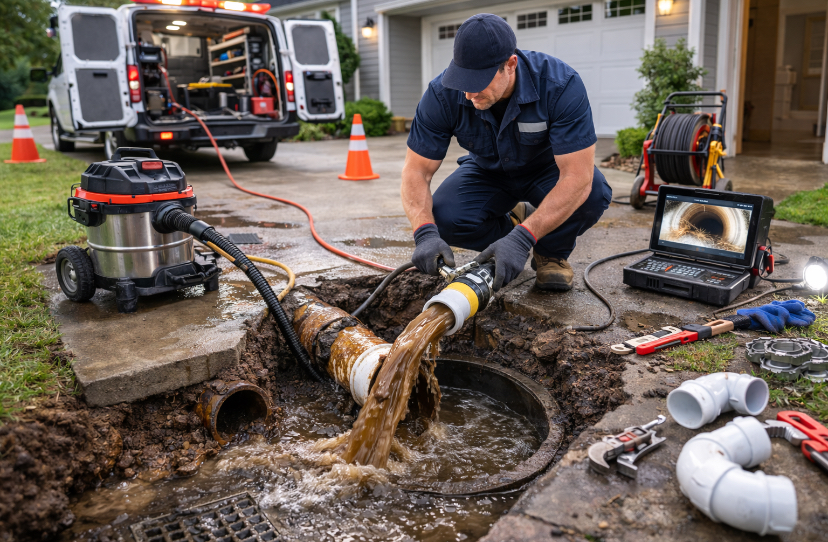
A sewer backup puts your home and your family’s health at risk. The Houston Plumbing Company provides same-day sewer backup repair across Greater Houston. Our licensed plumbers use video camera inspection to find the exact source of the problem before any work begins. You get an honest diagnosis and a clear plan — not guesswork.
Houston homeowners have rated us 4.9 stars across 280+ Google reviews. Our plumbers are licensed, insured, and trained to handle Houston’s toughest sewer problems — from clay soil pipe damage to tree root intrusion to storm-related backups. We’re available 24/7 because sewage emergencies don’t follow a schedule.
Call The Houston Plumbing Company today to schedule a free estimate. We offer transparent pricing before work starts and financing for major sewer repairs. Backup cleanup is one part of our drain and sewer services in Houston.
Common Causes of Sewer Backups in Houston Homes
Sewer backups don’t happen without a reason. Something is blocking the main line between your home and the city sewer connection. Knowing the cause helps you act fast and avoid serious water damage.
Tree root intrusion is one of the most common causes we see. Houston’s large live oaks and magnolias send roots toward sewer line joints. Even a small crack gives roots a way in. Once inside, they grow until the line is fully blocked.
Grease and debris buildup is another frequent problem. Cooking grease poured down the kitchen drain hardens inside the pipe over time. Combined with soap residue and food waste, it narrows the line until water can’t pass through.
Aging pipe materials cause failures across older parts of the city. Cast iron and clay sewer lines corrode, crack, and collapse after decades underground. Homes in the Heights, Meyerland, and Montrose often still have original pipes from the 1950s through 1970s.
Soil shifting plays a big role in Houston. Our expansive clay soil swells when wet and shrinks when dry. That constant movement cracks underground sewer lines and separates pipe joints.
Storm overload adds pressure during heavy rain events. When damaged sewer connections take on excess stormwater, the system backs up into your home through the lowest drain.
Warning Signs a Sewer Backup Is Starting
Catching a sewer problem early keeps raw sewage out of your home. These warning signs tell you the main sewer line needs attention — not just a single drain.
Multiple slow drains at the same time is the clearest signal. If your kitchen sink, shower, and bathroom sink all drain slowly, the problem is in the main line — not at one fixture.
Gurgling sounds from your toilets often show up when you run the washing machine or shower. Air trapped in a partially blocked sewer line pushes back through the lowest fixtures and creates that bubbling noise.
Sewage odor near floor drains means waste is sitting in the line instead of flowing out. You may notice the smell in your garage, hallway bathroom, or near cleanout access points.
Water backing up in the lowest drain is a late-stage warning. If you see water rising in your bathtub, shower floor, or garage drain when no one is using water, the main line is blocked.
A single clogged toilet does not always mean a sewer backup. But repeated clogs in the same toilet — or clogs that return within days of clearing — point to a deeper blockage in the main sewer line.
Houston homes sit on slab foundations. There are no basement drains to catch early overflow. Most homeowners in Houston first notice backup signs in the master bathroom or kitchen, where the main line connects closest to the house.
Tree Root Intrusion Is a Leading Cause of Sewer Line Damage
Tree roots follow moisture. A small crack or loose joint in your sewer line sends out enough moisture to attract roots from nearby trees. Once a root finds that opening, it grows inside the pipe and expands until the line is blocked.
Several tree species common in Houston cause the most sewer line damage. Live oaks, magnolias, willows, and Chinese tallow trees all have aggressive root systems. If any of these grow within 20 feet of your sewer line path, root intrusion is a real risk.
Video camera inspection confirms the problem without digging. Our plumbers feed a waterproof camera through the sewer line to locate exactly where roots have entered. The camera shows whether roots have cracked the pipe, created a partial clog, or collapsed a section of the line.
Treatment depends on the severity. Mechanical root cutting clears the blockage and restores flow for lines that are still structurally sound. If roots have cracked or collapsed the pipe, repair or full line replacement may be the better long-term fix.
Ignoring root intrusion leads to a complete blockage. When that happens, sewage has nowhere to go except back into your home through floor drains and fixtures.
Neighborhoods like Copperfield, Bear Creek, and Memorial have mature tree canopies throughout. Root intrusion is one of our most common sewer calls in these areas of Houston.
What to Do When Sewage Backs Up in Your Home
An active sewer backup is a health hazard. Raw sewage carries bacteria, viruses, and pathogens that are dangerous to your family and pets. Acting quickly protects your health and limits property damage.
Stop using all water in the home immediately. Do not flush toilets, run faucets, or start the dishwasher or washing machine. Any water you send down the drain adds to the backup.
Keep everyone away from affected areas. Move your family and pets to a clean part of the house. Do not walk through standing sewage or let children near contaminated floors.
Do not try to clean sewage with a household mop or towels. Contaminated water requires proper sanitation methods. Spreading it with household tools makes the affected area larger and harder to clean safely.
Open windows for ventilation if safe to do so. Fresh air helps reduce exposure to sewage gases while you wait for help to arrive.
Call a licensed plumber for emergency sewer backup repair. Do not wait to see if the problem clears on its own. A main line blockage will not resolve without professional repair.
Document the damage with photos before cleanup begins. Take pictures of affected flooring, walls, cabinets, and personal belongings. Your insurance provider may need this documentation when you file a claim.
Houston’s humidity accelerates mold growth after sewage exposure. Even a short delay in cleanup gives mold a chance to take hold in drywall, baseboards, and subflooring. Fast professional response is critical in our climate.
Trenchless Sewer Repair Fixes Lines Without Digging Up Your Yard
A damaged sewer line used to mean trenching across your entire yard. Trenchless repair methods fix the pipe through existing access points — saving your landscaping, driveway, and time.
Two main trenchless methods handle most sewer line problems. Pipe lining (cured-in-place) inserts a resin-coated liner into the damaged pipe. The liner hardens and creates a new pipe inside the old one. Pipe bursting breaks apart the old pipe while pulling a new one into place behind it.
Trenchless repair works for cracked, root-damaged, and partially collapsed lines. Our plumbers assess the damage with a video camera inspection first. The camera shows the exact condition of the pipe and whether trenchless methods will hold up long-term.
Most trenchless repairs require only one or two small access points instead of a full-length trench across your property. That means less disruption to your daily routine and far less restoration work after the job is done.
Many trenchless sewer repairs finish in a single day. Traditional dig-and-replace jobs can take several days depending on the length of the line and what sits above it. Trenchless methods cut that timeline significantly.
A second video camera inspection after the repair confirms the result. You see the finished line on screen before our crew leaves your property.
Not every situation qualifies for trenchless repair. If the line has fully collapsed or shifted out of alignment, traditional replacement may be the only option. Our team inspects the line and recommends the best method for your situation.
Many Houston homes have sewer lines running under driveways, patios, or landscaping. In neighborhoods like Cinco Ranch and Jersey Village, trenchless repair avoids tearing up hardscaping that would cost thousands to replace.
How Long Sewer Lines Last and When to Plan for Replacement
Every sewer line has a lifespan. Knowing what type of pipe runs under your Houston home helps you plan ahead — before an emergency forces your hand.
Cast iron sewer lines last 50 to 75 years. These are common in Houston homes built before 1980. Corrosion builds inside the pipe over decades and eventually weakens the walls enough to crack or collapse.
Clay pipes last 30 to 50 years. Also called orangeburg pipes, these were installed in many Houston homes from the 1940s through the 1970s. Many have already failed or are close to end of life.
PVC sewer lines last 75 to 100 years or more with proper installation. Homes built from the 1980s forward are more likely to have PVC, which resists corrosion and root intrusion better than older materials.
Several signs tell you replacement is getting close. Frequent backups that keep returning after clearing are a strong indicator. Multiple repairs within two to three years suggest the whole line is failing — not just one section. Visible corrosion on your sewer cleanout cap also points to deterioration inside the line.
A video camera inspection takes the guesswork out of the decision. Our plumbers send a camera through the full length of the line. You see the pipe condition on screen and get a clear recommendation based on what the camera shows — not assumptions about age alone.
Proactive replacement prevents emergency backups and the water damage that comes with them. It also protects your foundation from long-term sewage leaks underground.
Homes in Spring Branch, Bellaire, and West University Place built in the 1960s and 1970s are in the prime window for sewer line replacement. If your Houston home falls in that age range, a camera inspection is a smart first step.
Frequently Asked Questions
What causes sewer backups in Houston homes?
Tree roots, grease buildup, aging pipes, and shifting clay soil are the top causes in Houston. Our plumbers use video camera inspection to confirm the exact source of the blockage before recommending a repair plan.
How do I know if I have a sewer backup or just a clogged drain?
Multiple drains running slow or backing up at the same time points to a main sewer line problem. A single slow drain is usually a localized clog at one fixture. If more than one drain is affected, call a licensed plumber for a sewer line inspection.
Can tree roots be removed from a sewer line without replacing the pipe?
Yes, mechanical root cutting clears the blockage and restores flow in lines that are still structurally intact. If roots have cracked or collapsed the pipe, repair or replacement may be needed. A camera inspection after root cutting shows the true condition of the line.
Is a sewer backup covered by homeowners insurance?
Coverage varies by policy and the cause of the backup. Document all damage with photos before cleanup begins. We provide detailed repair documentation to support your insurance claim process.
Can a sewer line be repaired without digging
Trenchless repair methods fix many sewer line problems through small access points without trenching across your yard. Our team inspects the line with a camera first to determine if trenchless pipe lining or pipe bursting is a good option for your situation.
How often should I have my sewer line inspected in Houston?
Every two to three years for homes over 20 years old. Schedule an inspection sooner if you notice slow drains, sewage odors, or soggy spots in your yard. Regular inspections catch small problems before they turn into full backups.
Schedule Sewer Backup Repair in Houston Today
Sewage backups cause health hazards and property damage — don’t wait for the problem to get worse. The Houston Plumbing Company has the licensed, insured plumbers Houston homeowners trust. With a 4.9-star Google rating and 280+ reviews, we deliver fast, honest sewer repair across Greater Houston.
We offer 24/7 emergency service with same-day response available. Free estimates with transparent pricing before work begins. Financing available for sewer line repair and replacement. Backups often trace to damage our sewer line repair service corrects.
Call (281) 247-5055 for sewer backup repair in Houston.