
Most plumbing emergencies do not happen without warning. Slow drains, faint odors, and gurgling pipes are signs that buildup is forming inside your lines. Drain and sewer maintenance in Houston catches these problems early — before they turn into sewage backups, water damage, or emergency repair calls. The Houston Plumbing Company provides scheduled inspections and preventive cleaning for residential and commercial properties. We are licensed, insured, and backed by a 4.9-star Google rating with over 280 reviews.
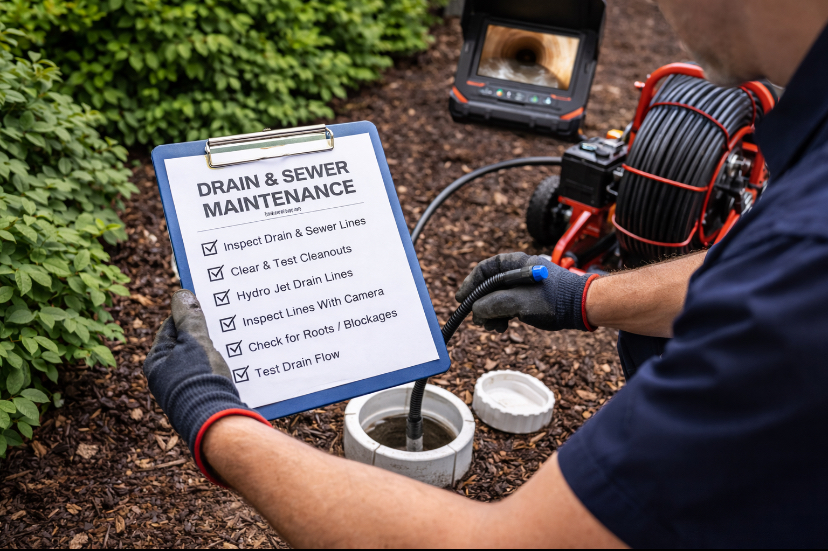
Houston puts constant pressure on your plumbing. Hard water deposits narrow your pipes from the inside. Tree roots work into aging pipe joints year-round. Clay soil shifts and settles sewer lines into low spots where grease and debris collect. Storm season pushes extra water through systems that may already be restricted. Our team uses video camera inspections to find buildup, cracks, and root intrusion before they cause a failure. Proactive maintenance extends the life of your drain and sewer lines and keeps your home running without interruption. Same-day appointments are available.
Call The Houston Plumbing Company today to schedule a maintenance inspection. We offer 24/7 emergency service if a problem has already started. Keep your drains and sewer lines working — do not wait for a breakdown to find out something was wrong. Maintenance plans cover the full range of our drain and sewer services in Houston.
What Drain and Sewer Maintenance Actually Includes
Many homeowners only call a plumber when something stops working. Maintenance takes a different approach. Instead of reacting to a backup, you schedule regular service that keeps your entire drain and sewer system in working order.
Your home has two connected systems. Drains handle water from individual fixtures — kitchen sinks, bathroom sinks, showers, tubs, toilets, and floor drains. The sewer line is the main pipe that carries all of that wastewater from your home out to the city connection. Maintenance covers both.
A full maintenance visit starts with a video camera inspection of the sewer line. A small waterproof camera feeds through the pipe and shows us the condition of the interior in real time. We look for grease buildup, mineral scale from Houston’s hard water, tree root intrusion, cracks, bellies, and any signs of pipe deterioration. The camera tells us exactly what is happening inside the line — no guessing.
Preventive cleaning comes next. Using professional tools — drain snakes, augers, or hydro jetting — we remove grease, scale, hair, food debris, and any other material building up inside your lines. The goal is to clear the pipe before the buildup becomes a blockage.
Every maintenance visit includes a condition report. We tell you the state of your pipes, flag anything that needs attention, and help you plan ahead. Older systems in neighborhoods like The Heights and Montrose benefit the most from this kind of scheduled care. Houston homes sit on slab foundations, and sewer lines run under concrete where problems stay invisible until they back up. Regular inspection is the only way to stay ahead of them.
Warning Signs Your Houston Sewer Line Needs Attention
Sewer line problems build slowly. By the time wastewater backs up into your home, the issue has likely been developing for weeks or months. Knowing what to watch for helps you act early — before a small restriction turns into a full backup.
The most telling sign is multiple drains running slow at the same time. When your kitchen sink, shower, and toilet all struggle to drain, the problem is not in one fixture. It is in the main sewer line that connects them all. A single slow drain usually means a local clog. Multiple slow drains point to something deeper.
Sewage odors near your drains, cleanout access points, or yard are another clear signal. That smell means wastewater is sitting in the line instead of flowing out to the city main. Grease, roots, or debris have restricted the pipe enough to slow everything down.
Gurgling sounds from toilets or drains deserve attention too. When you hear bubbling while water runs elsewhere in the house, air is trapped behind a partial blockage. That gurgling often gets worse over time as the restriction grows.
Water backing up into the lowest fixture in your home — usually a floor drain or bathtub — is the most urgent warning. It means the main line is blocked and wastewater has nowhere to go but back inside.
Outside your home, watch for patches of unusually green or soggy grass above the path of your sewer line. A leaking pipe feeds the soil around it, and the grass responds.
Houston’s clay soil expands and contracts with moisture changes, shifting sewer lines and creating low spots where debris collects. Mature trees in established neighborhoods like River Oaks and Meyerland push roots into aging pipe joints year-round. If any of these signs are present, schedule a maintenance inspection. A video camera tells us exactly what is happening inside the line.
How Often Houston Homes Need Drain and Sewer Service
There is no single answer that fits every home. The right maintenance schedule depends on your property’s age, pipe material, tree proximity, and how your household uses the plumbing. But a clear baseline exists, and adjusting from there is straightforward.
Most Houston homes benefit from a full drain and sewer inspection once a year. An annual visit lets us camera the sewer line, clean the drains, and catch any developing issues before they reach the point of backup. For homes with no history of problems and newer plumbing, once a year is usually enough.
Homes with mature trees near the sewer line need more frequent attention. Tree roots in Houston grow year-round — they do not go dormant in winter like they do in colder climates. Live oaks, magnolias, and pecans send roots toward sewer lines constantly. If your property has large trees within 20 feet of the line, scheduling service every 6 to 12 months gives you better protection. Properties in Katy, Cypress, and Sugar Land with mature landscaping fall into this category.
Older homes built before the 1980s often have cast iron or clay sewer pipes. These materials corrode and crack over time, and their rough interior surfaces collect buildup faster than modern PVC. Inspecting these systems twice a year helps catch deterioration early.
Households with heavy kitchen usage or multiple occupants should schedule drain cleaning at least once a year. More people and more cooking means more grease, food debris, and hair moving through the system daily.
Commercial properties operate on a tighter schedule. Restaurants and food service businesses typically need quarterly or semi-annual maintenance to keep grease lines open and stay in compliance.
After any sewer backup or major clog, schedule a full maintenance inspection regardless of your regular cycle. The backup may have been caused by something deeper in the line that needs monitoring.
Who Is Responsible for Drain and Sewer Lines in Houston
One of the most common questions we hear is who handles sewer line problems — the homeowner or the city. The answer is simple, but many homeowners do not learn it until something goes wrong.
The homeowner owns and maintains the sewer lateral. That is the pipe running from your home to the city sewer main, which is usually located in the street or a utility easement. Everything on your side of that connection — the full length of the lateral, plus every drain line inside the house — is your responsibility to inspect, clean, and repair.
The City of Houston Public Works maintains the public sewer main. If the city main is blocked or damaged, that is their responsibility. But if the problem is in your lateral or anywhere between your home and the city connection, the repair and maintenance fall on you as the property owner.
Standard homeowners insurance typically does not cover sewer line repair or replacement. Most policies treat sewer laterals as a maintenance item, not a covered loss. Some insurers offer optional sewer line coverage as a rider to your policy. If you are not sure what your policy includes, check with your insurer before a problem occurs — not after.
Building insurance for commercial properties varies by carrier and policy type. If you own or manage a commercial building in Houston, verify whether your drain and sewer lines are covered before you need to file a claim.
This is exactly why routine maintenance matters. The sewer lateral is your pipe, and keeping it clear and structurally sound is your responsibility. Catching a crack, root entry point, or grease buildup during a scheduled inspection costs far less than replacing a full sewer line after a failure. Maintenance is the most practical protection you have for a pipe that most homeowners never think about until it stops working.
Why Routine Maintenance Replaces Emergency Repairs
Emergency sewer calls happen for one reason — something that could have been found earlier was not. A root that started as a small tendril grew into a full blockage. A grease layer that built up over months finally sealed the pipe. A crack that started leaking slowly became a collapse. Every emergency we respond to started as a small, fixable problem.
Emergency service is urgent by nature. Sewage is backing up, water is rising, and the situation needs immediate attention. That urgency drives the scope of the work. Emergency calls often require extended labor, after-hours scheduling, and sometimes excavation to reach the damaged section. The disruption to your household is real — and it happens on the plumbing’s timeline, not yours.
Scheduled maintenance flips that equation. A planned inspection finds root intrusion when it is just beginning to enter the pipe joint. A maintenance cleaning removes grease buildup while the pipe is still flowing. A camera inspection catches a hairline crack before it becomes a full break. You address the issue on your schedule, with a clear diagnosis and a plan in place.
Timing matters in Houston. Storm season runs from June through November, and heavy rains put extra volume through your sewer system. Having your lines inspected and cleaned before storm season starts reduces the risk of a backup when your system is under the most stress. Homes in the Energy Corridor and Memorial with large lots and mature trees see the most root-related emergencies during and after heavy rain events.
Holiday cooking season — Thanksgiving through New Year — drives a spike in kitchen drain backups across Houston. Grease, food scraps, and heavy sink usage push kitchen lines past their limit. A fall maintenance appointment clears your drains before the busiest cooking stretch of the year.
Maintenance puts you in control. You choose when the plumber comes, you know what to expect, and you handle small issues before they grow. Emergency calls take that control away. The difference between the two is a single scheduled visit.
Why Chemical Drain Cleaners Work Against Your Maintenance Goals
If you are investing in drain and sewer maintenance, the last thing you want is to damage your pipes between visits. That is exactly what chemical drain cleaners do. They feel like a quick fix, but they work against the condition you are paying to protect.
Chemical drain cleaners generate intense heat inside the pipe to dissolve blockages. That heat warps PVC and cracks older cast iron — two of the most common pipe materials in Houston homes. Many properties built before the 1980s still have cast iron, galvanized, or clay sewer pipes. These materials are already aging. Adding caustic chemicals accelerates their deterioration from the inside out.
The cleaning itself is incomplete. Chemicals dissolve a narrow channel through the blockage, and water starts flowing again. But the rest of the buildup stays on the pipe walls. Within weeks, grease, scale, and debris close that channel and the drain slows down again. The clog was never fully removed — it was temporarily reduced.
Between uses, residual chemicals sit inside your pipes. That lingering contact corrodes walls, joints, and fittings over time. Repeated use weakens the exact pipes you are spending money to maintain. Each bottle does a little more damage to a system you are trying to keep healthy.
Houston’s hard water already puts stress on pipe interiors through constant mineral deposit buildup. Adding chemical products compounds that wear and shortens the useful life of your lines.
Professional drain maintenance uses mechanical tools — drain snakes, augers, and hydro jetting — or pressurized water to clean your pipes. No corrosive agents touch your plumbing at any point. The full blockage or buildup is removed, and the pipe walls stay intact.
If you have been using chemical drain cleaners regularly, schedule a video camera inspection. We can check the condition of your pipes and identify any damage before it leads to a bigger problem. Proper maintenance means keeping chemicals out of your lines — not pouring more in.
Frequently Asked Questions
How often should I schedule drain and sewer maintenance in Houston?
Once a year is right for most Houston homes. If your property has mature trees near the sewer line, older pipes, or a history of backups, every 6 to 12 months gives you better protection. Our team recommends a schedule based on your property after an inspection.
What is the difference between a drain and a sewer line?
Drains carry water from individual fixtures like sinks, showers, tubs, and toilets. The sewer line is the main pipe that moves all wastewater from your home to the city connection. Maintenance covers both systems to keep everything flowing properly.
Am I responsible for the sewer line on my Houston property?
Yes — the homeowner owns the sewer lateral from the home to the city main. The City of Houston maintains the public sewer in the street or easement. Inspection, cleaning, and repair of the lateral are your responsibility as the property owner.
Does homeowners insurance cover sewer line problems?
Most standard policies do not cover sewer line repair or replacement. Some insurers offer optional sewer line riders that add this coverage. Check your policy before a problem occurs — routine maintenance helps you avoid emergency situations altogether.
How can I tell if my main sewer line has a problem?
Multiple slow drains, sewage odors, gurgling sounds, water backing up into the lowest fixture, or soggy patches in your yard are the most common signs. A video camera inspection confirms the issue, its exact location, and its severity.
Does The Houston Plumbing Company offer emergency sewer service?
Yes — we provide 24/7 emergency service for sewer backups and drain emergencies across Houston. Call us anytime, day or night. Scheduling routine maintenance reduces the chance you will need an emergency visit in the first place.
Schedule Drain and Sewer Maintenance in Houston Today
Do not wait for a backup to find out your sewer line needed attention months ago. The Houston Plumbing Company is licensed, insured, and rated 4.9 stars by Houston homeowners and businesses.
Every maintenance visit includes video camera inspection, preventive cleaning, and a condition report — all in one appointment. Same-day service is available, and our team is on call 24/7 for emergencies. You get a free estimate and transparent pricing before any work begins. Most plans start with scheduled drain cleaning on your kitchen and main lines.
Call (281) 247-5055 for drain and sewer maintenance in Houston.